
Read the information below if you have a business in the Green or Social field and you want to get ahead with your future proposal!
Sustainable businesses are those inspired by the values expressed by the “TBL – triple bottom line” (people, planet, profit) concept and thus aiming at an economical goal while at the same time providing a positive impact on the environment, society or for a global, sustainable, business growth. To distinguish between a social/green business and charity/government initiatives respectively, the main element is economic viability, that is the business has to be financially sustainable and provide a profit throughout its own operations. Along with the “profit” pillar, company activities may be focused towards either the “planet” or “people” pillars (or both). In the former case we generally define the business as “Green”, while “Social” better defines the latter.
Clear To Engage publishes a call, C2E@Green/Social, to provide support actions (namely access to university project works, mentorships for the creation of an investment-ready business plan and cluod hosting incubation at partners’ facilities) to the specific kind of businesses described above. Below you find more details regarding the two alternative tracks.
Green Innovation
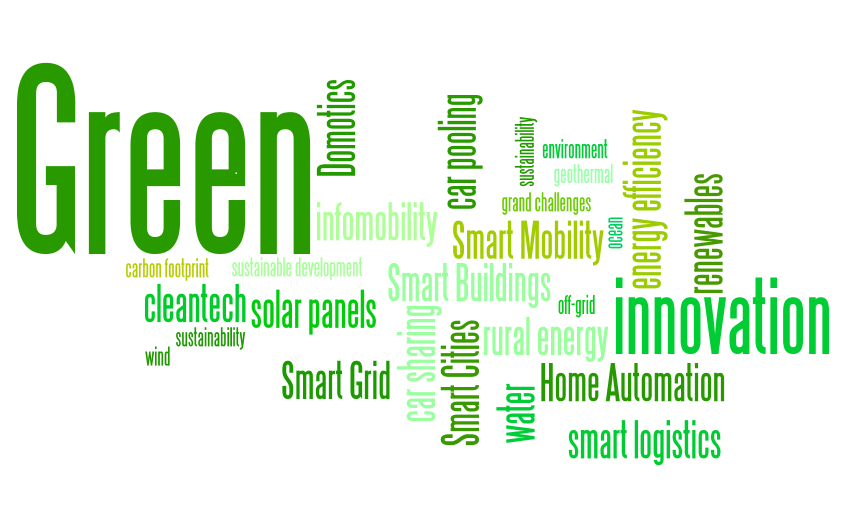 The Green track welcomes startup proposal for scalable, sustainable businesses operating with services or products that either directly or indirectly introduce or enhance a better, more efficient usage of natural resources (energy, water, waste, etc.).
This might include innovative, environmental-friendly products replacing current alternatives, innovative distribution models that lower the environment impact of current ones, and in general businesses that would introduce an overall reduction of the carbon footprint if their commercial offer proves succesful with customers. Some examples might include Smart City solutions enabling a more efficient transportation or even directly reducing the need for transportation; Smart Grid technologies increasing the efficiency of production and distribution of energy; Smart Buildings/Smart Homes technologies reducing energy consumption in residential or office buildings; innovative clean technologies for the production of energy through renewables or the management and conservation of water; ICT solutions reducing the carbon footprint of data centers or networks, and so on.
C2E will give special attention, within the green innovation track, to start-up projects operating in the fields of Smart Homes, Smart Buildings, Smart Grid, Smart Cities. These specific ventures may receive dedicated technical consulting along with the business plan mentorship, depending on the specific technology approach. For this specific call, Domotic and AmI solutions that will be most appreciated are those aiming at enhanced energy conservation models, as well as those improving and/or simplifying energy production and distribution.
Social Innovation
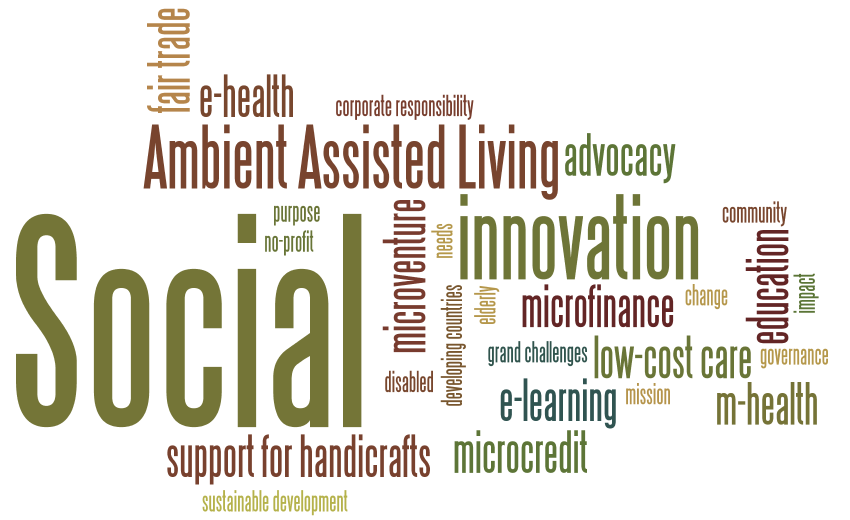 Social entrepreneurs build businesses that have a high value in terms of benefit to society at large or, more simply, one may define social entrepreneurship as that providing benefit to people not directly involved with the delivery of the value proposition. A social business, for example, provides value to its customers (just like any business) but at the same time, an collateral, tangible benefit is indirectly produced for other people (not regarded as target beneficiaries of the company) or for society as a whole.
Therefore, social ventures benchmark their own performance based both on profit and on positive return to society.
Some examples of social ventures might include not-for-profit or for-a-difference organizations supporting local development in under-developed countries, such as companies empowering artisans and handicrafts with commercial tools to reach international customers; other examples may be found in approaches to education, such as IT solutions to lower the cost of teaching, such as MIT’s OpenCourseWare, or educational programs targeted at social mobility, such as the “Education that pays for itself” approach.
Look for more examples on the Global Social Benefit Incubator – GSBI Alumni page
C2E will give special attention, within the social innovation track to start-up projects operating in the field of AAL – Ambient Assisted Living, that is technology-enabled support for the health and aging sector. This includes e-health, m-health solutions but, more in general, ICT solutions to enhance and prolong independence and quality of life of elderly and disabled people as well as to improve the effectiveness of National care systems, for example by reducing the cost or response time of care providing, thus enabling for a better and wider access to care. These specific ventures, as well, may receive dedicated technical consulting along with the business plan mentorship, depending on the specific technology approach.